By Teresa Burton
UNESCO Recognises Portuguese Equestrian Art –
A Living Legacy of the Lusitano Horse
UNESCO has recognised Portuguese equestrian art as Intangible Cultural Heritage. Discover the living legacy of the Lusitano horse and experience it through our retreats in Portugal.
UNESCO Recognition – A Global Stage for Portugal’s Heritage
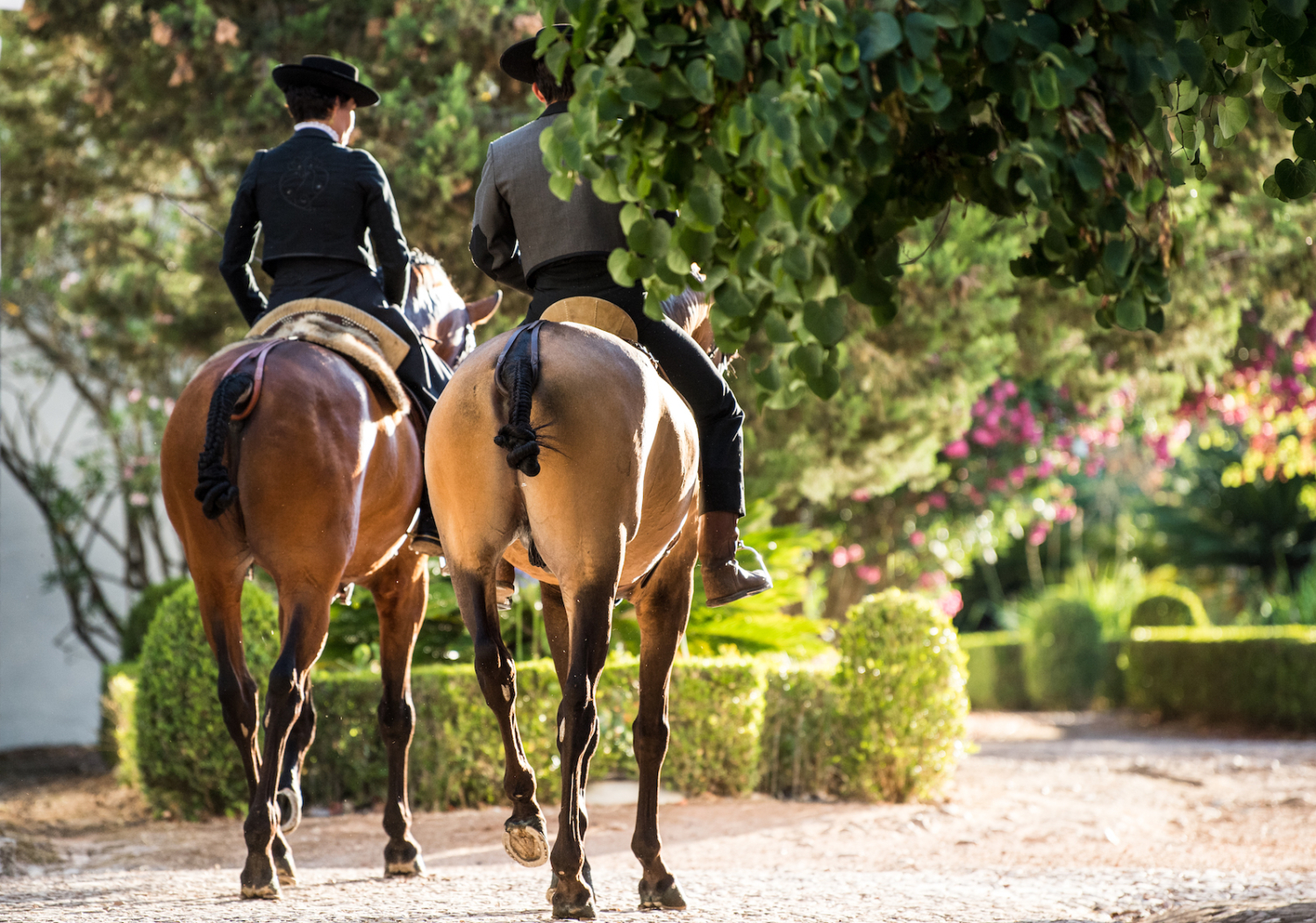
In December 2024, UNESCO inscribed Portuguese Equestrian Art onto its Representative List of Intangible Cultural Heritage of Humanity. This honour reflects centuries of tradition, harmony, and intergenerational transmission, rooted in the Lusitano horse and the cultural pride of Portugal. The nomination was submitted by the Associação Portuguesa do Cavalo Lusitano (APSL), Parques de Sintra – home to the Portuguese School of Equestrian Art, and the Municipality of Golegã. Together, they carried forward the voice of a community whose daily life and artistry revolve around the horse.
Source UNESCO
Cultural Scope
UNESCO’s emphasis on key pillars of the tradition:
-
Intergenerational transmission
-
Inclusivity (women side‑saddle, children, artisans)
-
Social events and fairs as practice grounds
This global recognition honors the unique blend of elegance and functionality in Portugal’s equestrian practice-rooted in tradition, driven by harmony, and embodied through the noble Lusitano horse.
More Than Technique — A Way of Being
A Living Tradition, Passed Through Generations
Not confined to the shows this heritage embodies equestrian art as a living tradition-carried forward by riders, breeders, cattle keepers, veterinarians, and artisans. It is taught in riding schools and practiced in fields, fairs, and at home in the families.
The knowledge flows through generations like water from a deep spring.
You see it at the Golegã fair — where young riders guide seasoned Lusitano stallions through intricate movements, sometimes riding alongside their grandfathers, each in full traditional attire. A boy may perform pirouettes with ease, while his father drives an elegant carriage nearby. Young girls ride side-saddle in beautifully embroidered skirts, embodying both grace and strength.
It is not a show. It is not rehearsed. It is simply how life is lived — horses as family, as tradition, as pride.
This isn’t just learned skill — it’s embodied culture, passed on through doing, watching, feeling. A heritage carried in muscle memory, in gestures, in breath.
Portugal’s classical equestrian culture is not only preserved through institutions — it is kept alive in the cobbled streets of towns like Golegã, by the children whose first steps may be taken on horseback.
The recognition is a tribute to all who have preserved and shared this legacy-from the Association of the Lusitano Horse, to the Municipality of Golegã and Parques de Sintra, whose combined efforts brought the proposal to UNESCO.
It celebrates not only the artistic expression, but the community of practice-those who live and breathe the Lusitano heritage every day.
At Lusitano Heritage, we are proud to be part of this living legacy. Our classical dressage retreats offer more than a riding holiday-they invite you into a world of mindfulness, connection, and cultural richness.
This UNESCO recognition affirms what we have always believed: that the bond between horse and human, practiced with presence and care, is a true art form. Now, more than ever, is the time to experience it.
There is no doubt that lovers of horses and riding that visit Portugal are captivated by the equestrian heritage it’s earthy ritual, way of life and deep rooted passion cradled throughout the country. It is any wonder so many dream to live in Portugal, to ride the dream and absorb this history in the riding, the food, the wines and the rich history.
The Lusitano – Horse of the Soul
The Lusitano horse is Portugal’s living treasure. Shaped over centuries for bullfighting, battle, and classical dressage, the Lusitano is noble, intelligent, generous, and brave. This is not just a breed. It is a companion in the dance of heritage.
The Flame Keepers — Portugal’s Classical Masters
Portugal’s classical equestrian heritage has been carried forward by individuals of extraordinary skill, humility, and presence: To name but a few of the great masters –
- Marquês de Marialva – Court equerry and author of Luz da Liberal e Nobre Arte da Cavallaria, codifier of the Portuguese classical tradition
- João Branco Núncio – Legendary bullfighter and horseman, a symbol of working equitation excellence
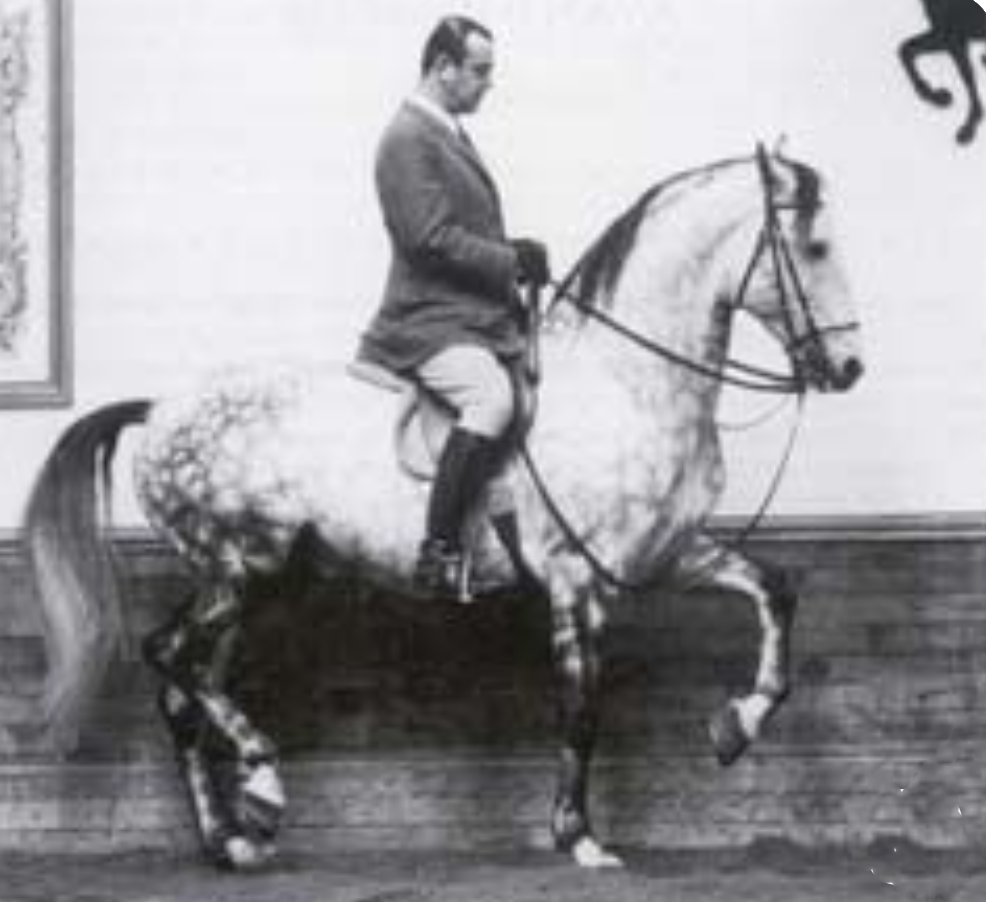
- Maestro Nuno Oliveira – The philosopher-rider whose spirit still echoes in every classical arena
- Major Miguel de Lancastre e Távora – Nobleman and author, transmitting the Portuguese way with clarity and grace
- Mestre Luís Valença – Former master rider of the Portuguese School and founder of a riding dynasty, considered one of the greatest living masters
- Dr. Filipe Gracioso – Visionary director of the Portuguese School, instrumental in preserving and professionalizing the art
- Manuel Veiga – Steward of Quinta da Broa and preserver of the Lusitano’s pure lineage
- Doutor Guilherme Borba – Classical theorist blending mind, breath, and horsemanship
- Paulo Caetano – Artist of liberty and form, bridging deep training with modern interpretation
- António Borba Monteiro – Known for elegant subtlety and intellectual depth
- Miguel Ralão Duarte – Grand Prix competitor trained in the Portuguese School tradition
- João Pedro Rodrigues – Former director and longtime guardian of the Escola Portuguesa
- Nuno Cavaco – Transformational modern classical teacher known for his clarity and feel
- Daniel Pinto – Olympic-level rider bringing Lusitano brilliance to the global stage, while holding true to classical foundations
And yet, these are but a few. Across Portugal, there are many unsung masters — riders, breeders, and quiet horsemen and women — whose daily work on remote farms and family yards carries just as much wisdom and heart.
Their knowledge may not always make headlines, but it lives in the way they handle a young colt, shape a saddle, or guide a horse with a whisper. They are the silent heartbeat of the Lusitano legacy — humble, generational, and true.
We Celebrate all that contribute to keeping these Wonderful Rich Traditions Alive

Amazing Kids in Golega
The Portuguese School of Equestrian Art – Ceremony in Motion
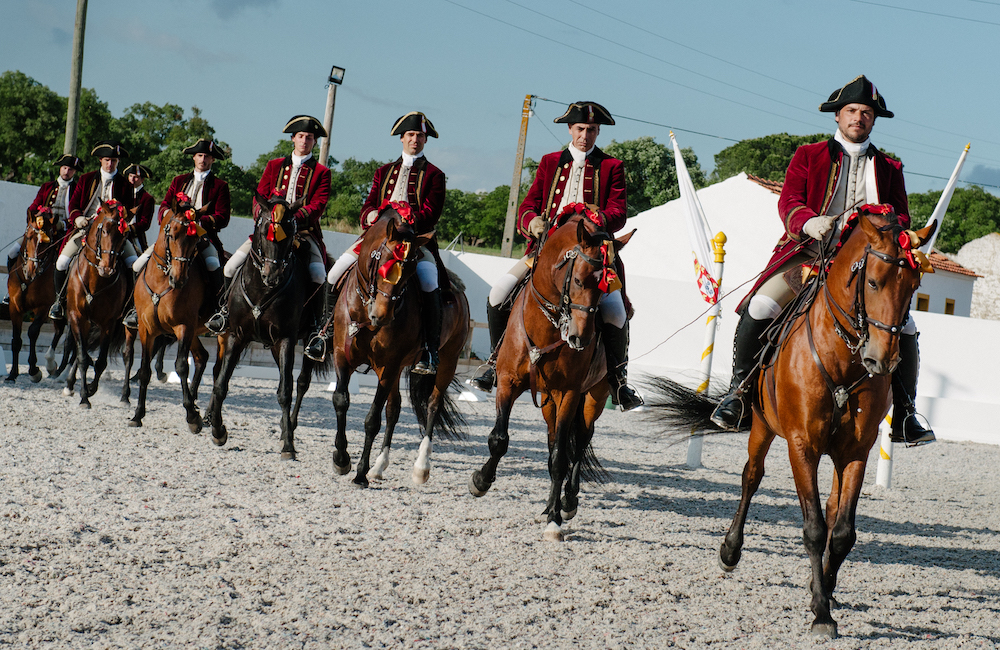
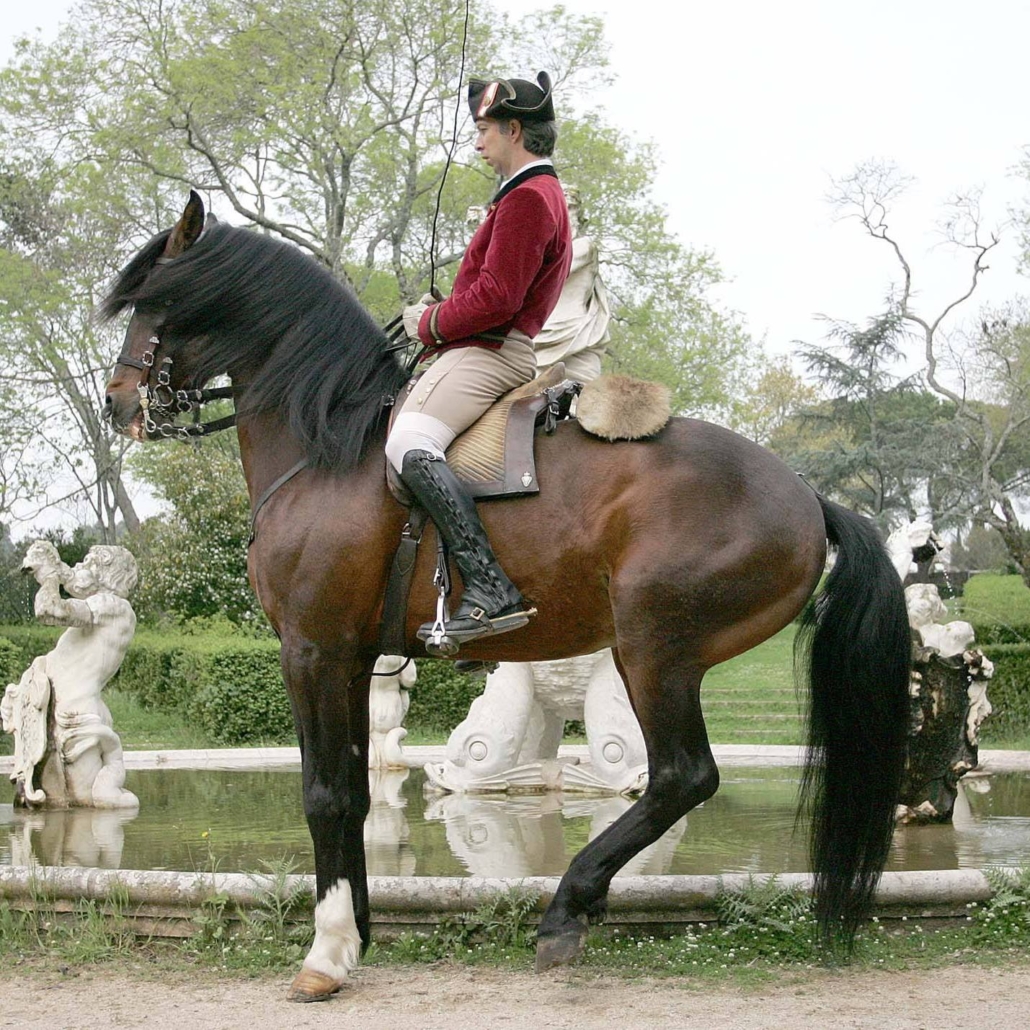
Known in Portuguese as Escola Portuguesa de Arte Equestre, it traces back to the Royal Court Academy founded in 1726 and was reestablished in 1979 at the Queluz National Palace. Now under Parques de Sintra. It features crimson coats, white breeches, tricorn hats — and a standard of grace that commands silence. The riders of the Portuguese School of Equestrian Art preserve not just a discipline, but a rich tradition.Their movements echo the pages of Marialva’s writings. Their horses, noble and collected, are bred at the Alter Real National Stud. Their bridles, bits, and saddles are handcrafted by masters such as Victorino Saddlery — every detail a salute to tradition.
The Makers – Hands That Shape the Heritage
Behind every ride, there are hands. Saddlers, spur makers, blacksmiths, tailors — without them, the performance would lose its soul. They are the unsung guardians of elegance, turning heritage into something you can touch, wear, and ride. Their artistry ensures that Portugal’s equestrian culture is not just remembered — it is worn, held, and lived.
The Campinos – Courage on the Plains
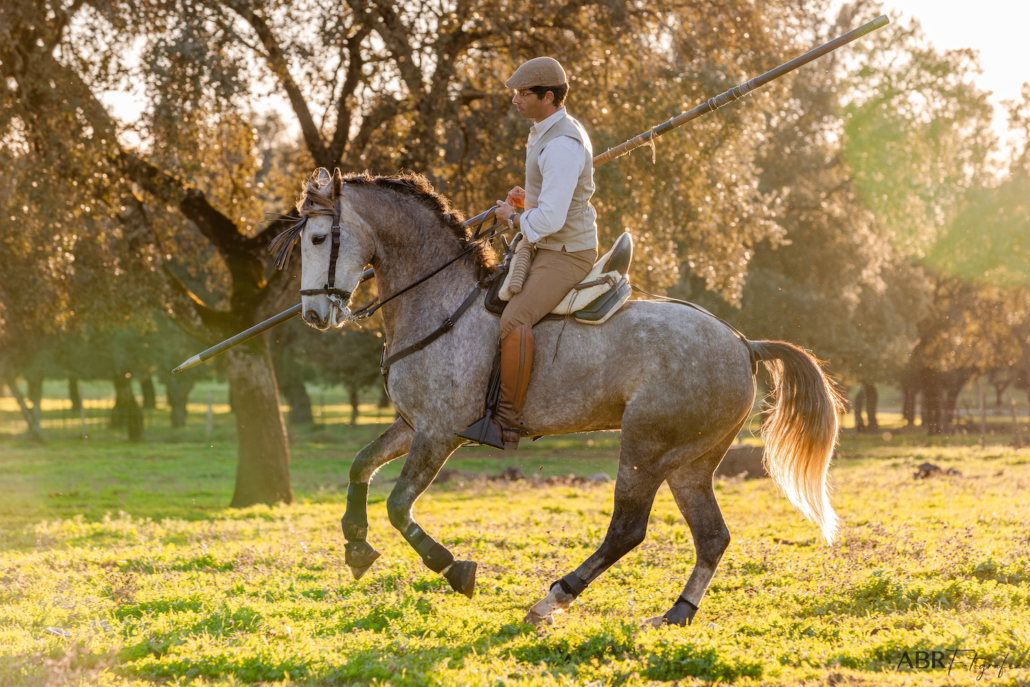
Dressed usually in shirts, trousers braces and boots the Campinos ride among bulls and cows across the Ribatejo plains, preserving a rural tradition that is still very much alive. They are not performers — they are practitioners.
Their tack is functional. Their courage is quiet. Their presence is a reminder: equestrian heritage is not only pageantry, but practice. Sometimes they can be seen dressed in green sashes and traditional felt hats, displaying their skills at the locals fairs where they artfully manoeuver small herds of cattle through the streets.
Article Life of the Campinos
The Amazona – Side Saddle with Soul
Graceful, poised, and powerful, Amazona riders preserve the elegant tradition of side-saddle while redefining femininity on horseback. Their presence is both historic and revolutionary. A flowing skirt, a firm seat, and a deep connection — this is strength with softness, riding its own path forward.
The Children of Classical Culture
From Working Equitation to Golegã performances, children ride with joy and confidence, showing that Portugal’s heritage is safe in the next generation’s hands.
Golegã Festival – The Living Tapestry of a Nation on Horseback
Every November, the town of Golegã becomes a pilgrimage of the soul. Riders from across the country — and the world — arrive in full traditional dress, turning the streets into a living museum of Portuguese equestrian identity.
The sound of hooves on stone, the scent of leather and roasted chestnuts, the silhouette of a Lusitano under lantern light — Golegã is where past and present ride together.
Article – The Golega Story
As Seen on The Ride Channel – Culture in Every Stitch
Our collaboration with The Ride Channel captures the depth and richness of this world. From the embroidery of jackets to the burnished leather of bridles, every detail tells a story of craft, place, and purpose.
These are not costumes. These are cultural signatures — worn with pride, made by hand, and passed down like heirlooms.
Lusitano Heritage – Experience the living Legacy
Portuguese equestrian heritage lives in the fields, fairs, and cobbled streets as much as in the arena. At the Golegã Horse Fair, young riders guide seasoned stallions alongside their fathers and grandfathers, dressed in traditional attire.
Girls ride side-saddle in embroidered skirts, embodying grace and strength.
This is not performance. It is life — horses as family, tradition, and pride. Heritage is passed on in gestures, muscle memory, and breath, as natural as learning to walk.
TAGS: UNESCO, Portuguese Equestrian Heritage, Lusitano Horse, Classical Dressage, Golegã Horse Fair, Equestrian Retreats Portugal, Lusitano Heritage
Why This All Matters – and What It Offers You
Heritage is continuity, not nostalgia. At Lusitano Heritage, you don’t just observe – you join. You ride, reflect, and reconnect with something timeless.
Your Opportunity to Join the Story
Whether you seek refinement, inspiration, or peace – we welcome you.
– Ride Lusitanos trained in the classical way
– Stay in nature among ancient oaks
– Learn from masters
– Join our Heritage Circle
– Invest in something meaningful
Come ride with us. Come remember what matters. Come feel the legacy – alive in every hoofbeat.
Images – Portuguese School and Riders in Ducal Palace by Lena Saugen Photography
Rider Bernardo Moura Tavares by ABR Fotos
Child riding in Golega Teresa Burton
Nuno Cavaco in Portuguese School from Archives
Mestre Nuno Oliveira – from Archives
Text by Teresa Burton